
39 – The Kickstarter and the Marketing
39 – The Kickstarter and the Marketing
If no one knows about a game, they won’t buy it. Without marketing, you won’t get far—at least not until you’ve made a name for yourself. For first‑time creators, it’s especially difficult to judge whether the marketing is sufficient.
Usually, the number of newsletter subscribers is an excellent indicator of how well a Kickstarter will perform. Unfortunately, my number wasn’t as high as I had hoped, and that became noticeable at the start of the campaign. However, I also can’t know in advance how many potential backers I’ll reach in the month leading up to the Kickstarter—because that’s when the most happens.
There were two convention appearances: BerlinCon, two weeks before the Kickstarter, and SPIEL in Essen during the campaign. I had the impression that these conventions brought in many supporters. But if you can’t sell games at the convention yet, the financial cost is very high.
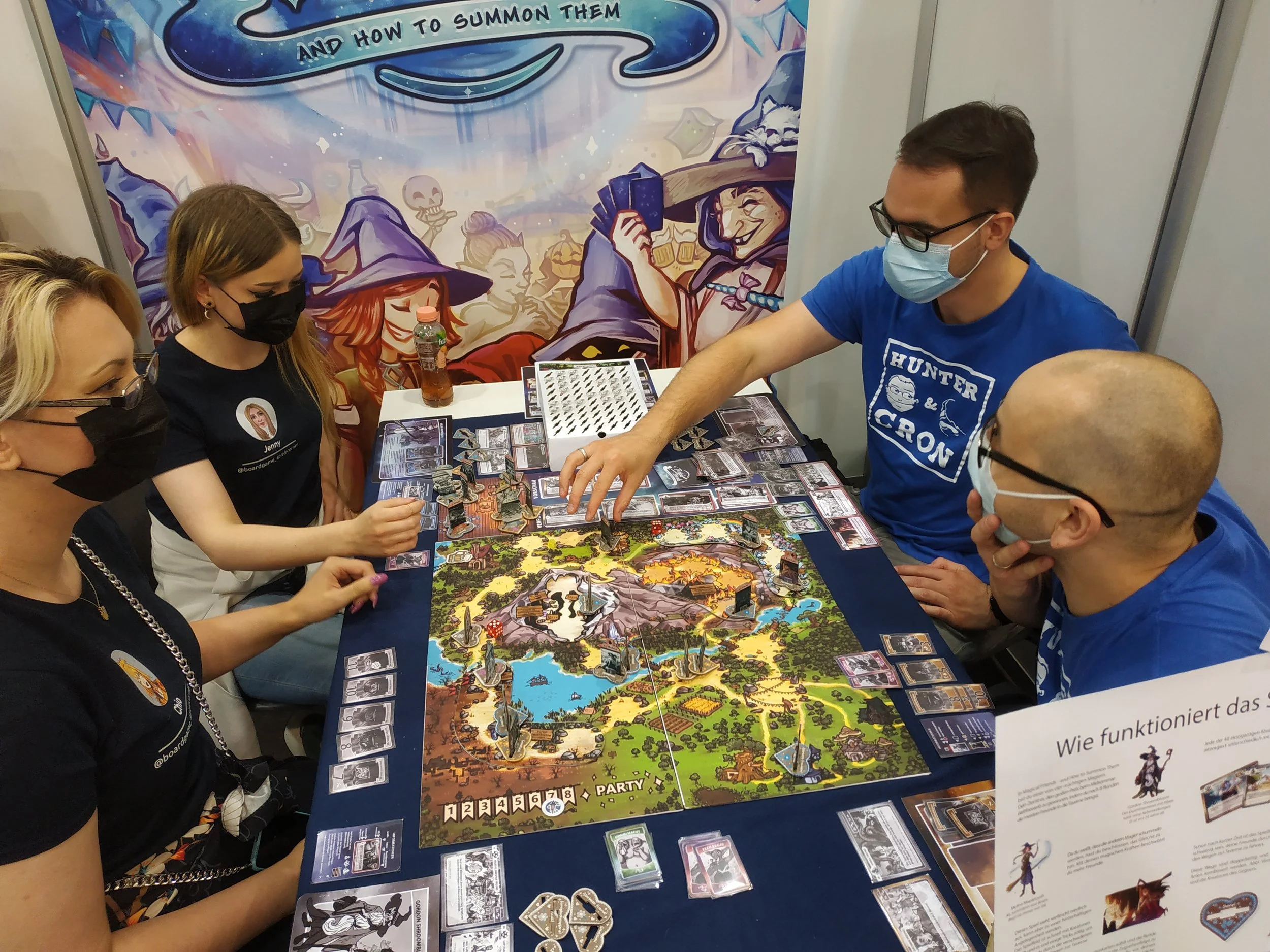
Thanks to the lovely convention players.
You also don’t know beforehand how strongly reviews will influence things. Of course, I could have scheduled them to appear well before the Kickstarter, but you can expect that people who get excited by a review will want to get the game as soon as possible. That’s why it’s usually recommended to release reviews close to the Kickstarter launch. I think that makes sense. But this timing also leaves you uncertain for quite a long time about how many interested people you’re actually reaching.
I did receive a lot of reviews. My eight prototype copies resulted in more than 20 reviews in total, and I’m very happy with the feedback I received.
And of course, there was also Facebook advertising, which reached many people.
However, during the Kickstarter campaign, it quickly became clear that something was missing. Despite the major effort put into the English version and marketing toward English‑speaking board gamers, we apparently didn’t reach enough players. Only about 20% of backers came from the English‑speaking world.
Marketing, however, costs a lot of time and money. To make a Kickstarter campaign look appealing, illustrators and graphic designers are needed again. Behind the scenes, marketing requires a lot of organization, creativity, and time. And the costs shouldn’t be underestimated. The conventions cost around €4,000. Review prototypes (handmade!), shipping, promotional videos for Kickstarter and YouTube added up to another €4,000, and digital advertising consumed another €3,000. That’s not a small amount of money—and yet it’s necessary.
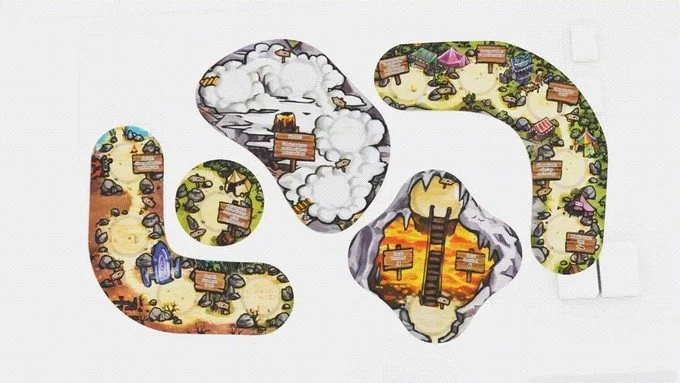
One of many graphics on the Kickstarter Page
Of course, I would much rather invest all that time and money directly into the board game. I can definitely recommend that if you’re making a game, make sure you have someone on your team (or someone you can pay) who handles marketing for you.
With a budget like this, the Kickstarter should have gone better, right?
For a small game, it probably would have been enough, and the Kickstarter would have succeeded without issue. But Magical Friends is not a small game, and that means it competes with big titles on Kickstarter. Especially in October, when many companies launch their campaigns to avoid the Christmas season (Kickstarter isn’t great for Christmas gifts ;) ), you’re competing with larger teams—teams that already have the trust of the Kickstarter community from previous projects, teams with more members and dedicated marketing staff, and companies with much larger budgets.
Your own marketing budget becomes far less efficient when it’s up against massive marketing budgets. When other companies run a lot of ads, mine simply gets drowned out. For new Kickstarter projects, I would definitely not recommend launching in October.
I think a large portion of my backers were people who met me personally. Most backers came from Austria and Germany, where we attended conventions and talked to the most people—people who had the chance to build trust in us. If that’s not the case, people can only rely on the advertising and the offer itself. With a limited budget, they have to choose. They can pick a product they like from a company they trust, with lots of shiny extras in the campaign—or a product they like from an unknown creator, with fewer shiny extras.
A deluxe version brings that special “bling,” but it also carries risk. In reality, it’s just as risky as advertising, and you should probably think of it as a form of advertising. For the second Kickstarter, I’ll carefully consider whether I want to offer a deluxe version.
I’m also not entirely satisfied with my landing page for newsletter sign‑ups. I definitely want to improve it. The platform I’ve been using limits my options too much.
There may also be adjustments to the game’s cover to better show that this is a highly interactive game where players can be mean to each other. Based on the cover, some people expected a family game rather than a hobby game.
It’s definitely easier to advertise something the more finished it is. I’ve noticed that I get much more feedback and interest when the things I post look nicer. So it gets easier with every step. It’s good that Magical Friends is already so far along—that makes the next attempt next year much more pleasant.
Have you had experiences with this topic? Did you see ads for Magical Friends? How do you feel about advertising? In the next posts, I’ll return to talking about design!