
34 - Testing and Feedback
When you design a game, a lot of testing is necessary — and with testing comes a lot of feedback. The nicest feedback, of course, comes from people who really enjoyed the game and for whom it truly clicked. Incredibly helpful are the constructive suggestions that can fix small flaws with minor adjustments. Then there are the big suggestions — the kind that would essentially turn the game into something completely different. By now, I could probably make five to ten entirely different games just from those ideas. And then, unfortunately, there are also the occasional people who are very unhappy with the game. That can be quite frustrating. More on that today.
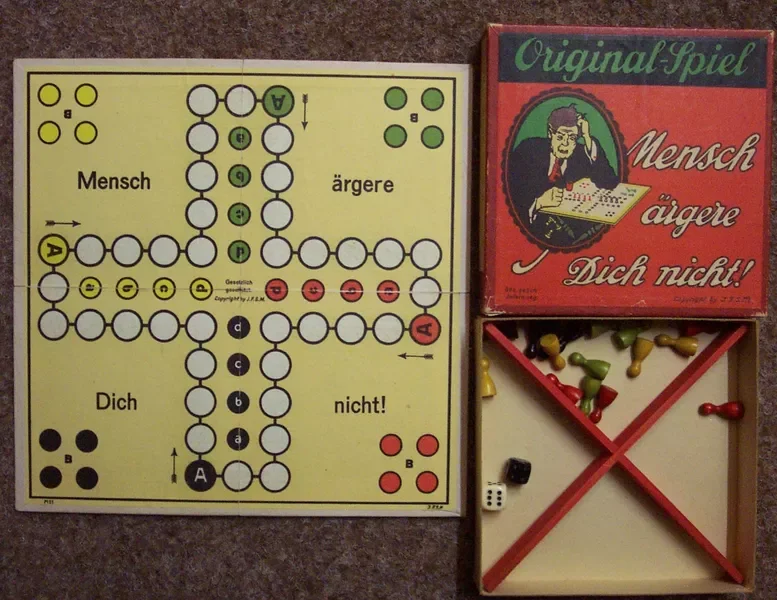
By now, I’ve done a lot of testing — plenty with friends, but also plenty with strangers. Recently, I received feedback from an unhappy tester who compared my game to Ludo (in German: Mensch ärgere Dich nicht). I had actually heard this comparison once before, and I simply didn’t understand where it came from. Some testers just struggle to describe the feeling they had while playing. So I start thinking about where this feedback might come from. I really don’t want people to think of Ludo when they play my game.
Boardgamegeek
Sure, my game is also a race, and you can knock out other pieces. But aside from that, the two games have nothing in common. One is a luck‑based game, and the other is a strategy game where you practically don’t need to roll dice at all.
So where does this comment in the feedback come from? At some point, the chaotic nature of the game was also mentioned. And suddenly, the comparison made sense to me. In my definition, a chaotic game is one where a lot happens while it’s not your turn, and it’s often hard to predict what will happen next. I can imagine that for some people, this feels like a luck‑based game — even though it isn’t one. In Magical Friends, you can plan how to reach your goal as safely as possible through different interactions, and you can also try to outsmart your opponents with clever tricks. There are just so many possibilities that it becomes difficult to predict what your opponents will do. In most tests, it was exactly these interactions that led to truly astonishing moves.
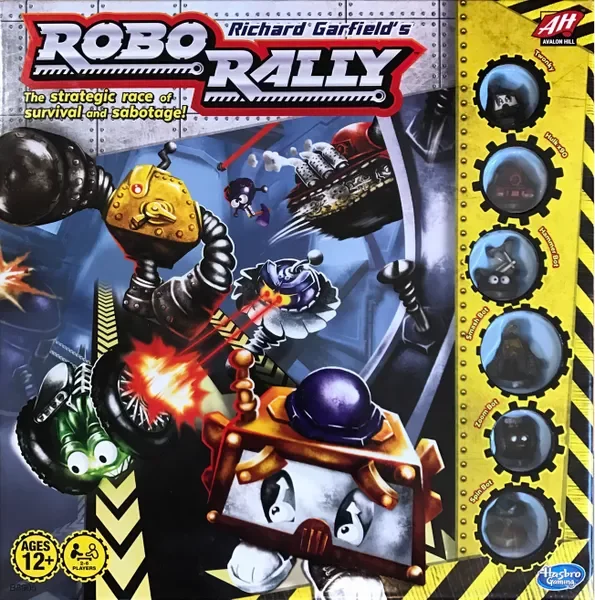
This explanation — that the chaos can feel like the randomness of a luck‑based game — was confirmed to me, and suddenly the feedback (including the one I received some time ago) became much easier to accept. The chaos, just like in many great games, is a central part of the experience. In some games, it comes from dice or cards; in others, it’s mainly the many options available to the players that create the chaos. For example, games like Robo Rally, Smallworld, or Millennium Blades.
Boardgamegeek.com
Of course, the game becomes better when the level of chaos is well‑balanced — but that’s exactly why you test, and the majority of testers enjoy that aspect of the game. So the frustration of this particular tester doesn’t necessarily point to a flaw in the game; it simply means the style of the game doesn’t match the player’s taste — and that’s perfectly fine!
Usually, you play games you’ve researched beforehand, or you’re invited by friends who know what suits you. But when testing a game that isn’t on the market yet, you’re thrown into cold water, and it’s easy for a game not to match the tester’s taste. That’s unfortunate, but it happens. As a designer, you really can’t take that too personally.
In the board‑gaming hobby, there is an enormous number of games. You often see those 3×3 challenges where players show pictures of their nine favorite games. I’ve seen countless of these collages, and I’ve never once come across one where I thought, “All of these are among my favorites.” Even when I felt someone had a very similar taste to mine, there were never more than five overlaps. That might sound disappointing at first, but even with players whose taste seemed completely different from mine, I always found one or two games that I really enjoy. And that’s the beautiful thing about this hobby: when you explore games, you can find something for almost any group that everyone will enjoy and that lets you have a great time together.
Are there types of games, genres, or mechanics that you really dislike — or especially love? Leave me a comment.
