
40 – How Long Should a Game Last?
40 – How Long Should a Game Last?
From my perspective: as short as possible — while still giving every aspect of the game enough time to feel satisfying.
The longer a game lasts, the more problems arise. If a player falls too far behind, it can quickly become frustrating to have no real chance of winning for an extended period. The longer a game lasts, the more you need to think about adding a catch‑up mechanism to prevent this. But the more such a mechanism interferes with the game, the less rewarding it feels for players to build a lead.
Longer games are also harder to fit into everyday life. A 30‑minute game can be played almost anytime, but for a 4‑hour game you need to set aside an entire afternoon. Even if such a long session can feel epic, you could just as well play two 2‑hour games — the game night wouldn’t feel any less epic. And even if you do have the time, you’re not always in the mood for a long game, and if you get tired during it, the whole thing can drag on even more.
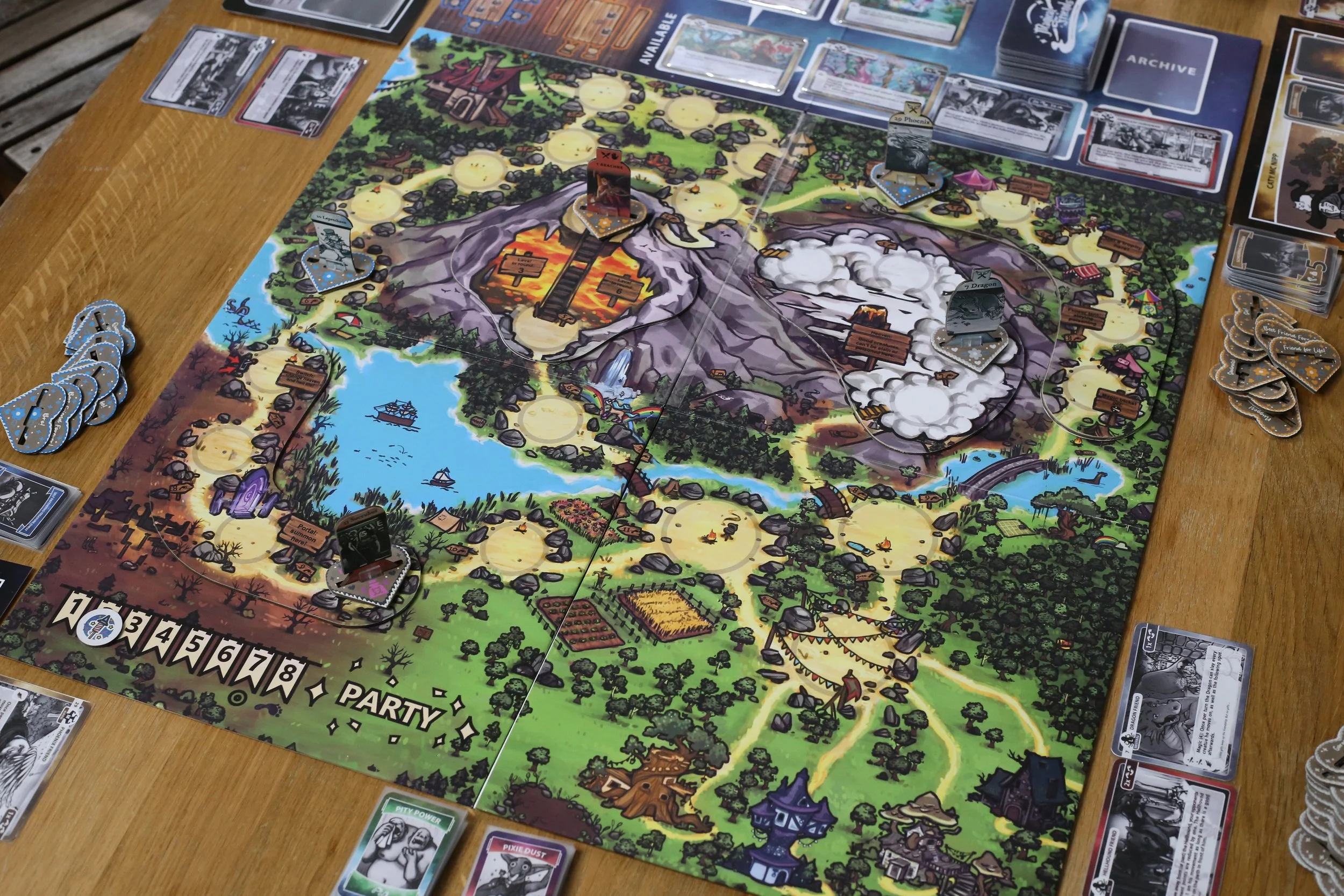
There have stil been 8 rounds of Magical Friends
So keeping the playtime as short as possible is usually the goal — as long as all game mechanics still make sense.
In some worker‑placement games, for example, I feel that the playtime is shortened at the expense of the number of rounds, especially when each round gives you enough actions to make the game interesting. But this sometimes leads to actions that are weaker in the short term but provide long‑term bonuses feeling unsatisfying, because you don’t get those bonuses often enough. Often these bonuses are very weak unless you manage to get them in the first round.
Playtime is usually hard to estimate. Different groups play very differently. A game that takes 1.5 hours with one group might take 2.5 hours with another. It also makes a difference whether it’s a group’s first play or their tenth, and how many players are involved. That’s why I prefer giving a playtime per player rather than a general time estimate.
While working on your game, you should always keep an eye on the duration, because many things can change over time. With Magical Friends, I originally set the game at 8 rounds. Since the first round has a bit less going on, and the last round also offers fewer options, the rounds in between were where most of the action happened. Six rounds were ideal for that. The tests with 8 rounds also went great. Over time, however, a few changes were made — extra rules to create a final sprint at the end of the game. This changed the game enough that the last round actually became the most exciting one. By now, we’ve tested several games with 7 rounds, and it doesn’t feel like anything is missing — but the game becomes shorter.
Of course, the game also needs to be tested frequently with fewer rounds, because the balance of certain creatures can change as a result. Sometimes this even has a positive effect on the number of components, because fewer rounds mean fewer resources entering the game.
How do you feel about game length? Do you prefer short or long games? Or would you rather play two shorter games instead of one long one? Which games have the perfect duration? Leave me a comment. :)
35 – Government Funding
35 – Government Funding
Board‑game designers and Kickstarter creators are incredibly helpful when it comes to pretty much any question that comes up. But one thing I’ve never seen anyone talk about is government funding. This topic is discussed far too rarely! I know that the available funding varies from country to country, from state to state, and even from city to city. But these grants can be incredibly helpful. We’re talking about a significant amount of money, and they exist to support small companies or new founders — not just big companies that grab every opportunity.

Photo by Fabian Blank on Unsplash
At least in Austria, there are many different types of funding, and many different organizations, associations, and institutions offer them. But they’re hard to find, because even these organizations often don’t have an overview of who is offering what. Many people don’t know anything about them. Please talk about this topic more! I received funding for starting my company and also for international advertising. These grants are, of course, only available in Austria — but if you want to know more, feel free to write to me. They do come with extensive requirements and regulations, which I’m happy to explain. Don’t let the rules scare you off. The contact persons will tell you whether your company qualifies anyway.
I’ve also heard of several grants for tech companies and research support in Austria, which don’t apply to my company, but they might be interesting for yours. In Germany, there also seem to be startup grants, research scholarships, and support programs for tech companies. Usually, all these funding programs have one thing in common: you need to have a clear picture of your product or company.
If you’re founding a company or have already founded one, write to me and I’ll share my experiences with you. And if you’ve received funding in Austria, Germany, or anywhere else, I’d love to hear about your experiences — I’m in close contact with many German designers, and your tips might be helpful for others as well. Maybe there are even EU‑wide grants, though I don’t know anything about those yet.
34 - Testing and Feedback
34 - Testing and Feedback
When you design a game, a lot of testing is necessary — and with testing comes a lot of feedback. The nicest feedback, of course, comes from people who really enjoyed the game and for whom it truly clicked. Incredibly helpful are the constructive suggestions that can fix small flaws with minor adjustments. Then there are the big suggestions — the kind that would essentially turn the game into something completely different. By now, I could probably make five to ten entirely different games just from those ideas. And then, unfortunately, there are also the occasional people who are very unhappy with the game. That can be quite frustrating. More on that today.
By now, I’ve done a lot of testing — plenty with friends, but also plenty with strangers. Recently, I received feedback from an unhappy tester who compared my game to Ludo (in German: Mensch ärgere Dich nicht). I had actually heard this comparison once before, and I simply didn’t understand where it came from. Some testers just struggle to describe the feeling they had while playing. So I start thinking about where this feedback might come from. I really don’t want people to think of Ludo when they play my game.
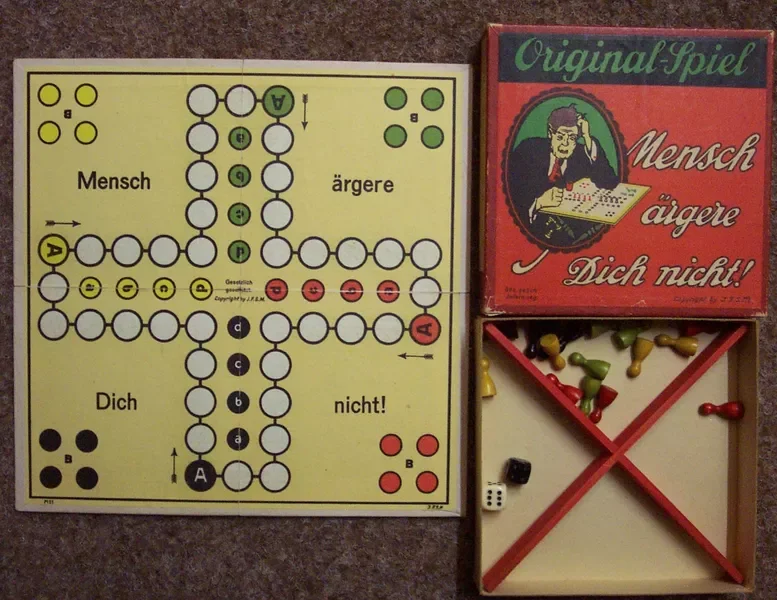
Boardgamegeek
Sure, my game is also a race, and you can knock out other pieces. But aside from that, the two games have nothing in common. One is a luck‑based game, and the other is a strategy game where you practically don’t need to roll dice at all.
So where does this comment in the feedback come from? At some point, the chaotic nature of the game was also mentioned. And suddenly, the comparison made sense to me. In my definition, a chaotic game is one where a lot happens while it’s not your turn, and it’s often hard to predict what will happen next. I can imagine that for some people, this feels like a luck‑based game — even though it isn’t one. In Magical Friends, you can plan how to reach your goal as safely as possible through different interactions, and you can also try to outsmart your opponents with clever tricks. There are just so many possibilities that it becomes difficult to predict what your opponents will do. In most tests, it was exactly these interactions that led to truly astonishing moves.
This explanation — that the chaos can feel like the randomness of a luck‑based game — was confirmed to me, and suddenly the feedback (including the one I received some time ago) became much easier to accept. The chaos, just like in many great games, is a central part of the experience. In some games, it comes from dice or cards; in others, it’s mainly the many options available to the players that create the chaos. For example, games like Robo Rally, Smallworld, or Millennium Blades.
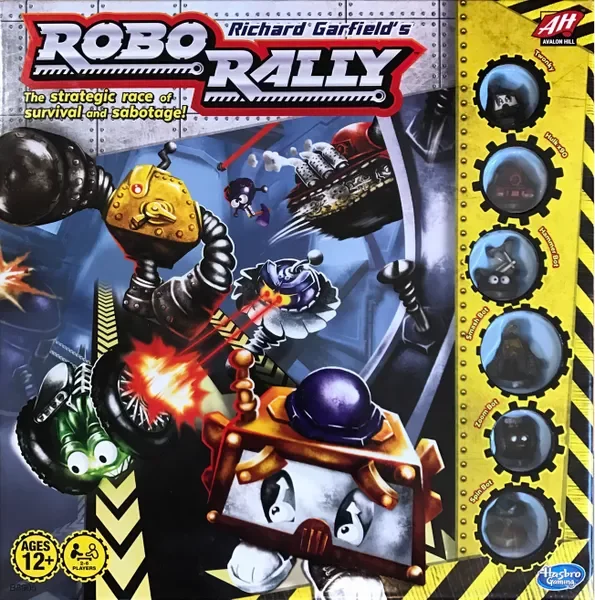
Boardgamegeek.com
Of course, the game becomes better when the level of chaos is well‑balanced — but that’s exactly why you test, and the majority of testers enjoy that aspect of the game. So the frustration of this particular tester doesn’t necessarily point to a flaw in the game; it simply means the style of the game doesn’t match the player’s taste — and that’s perfectly fine!
Usually, you play games you’ve researched beforehand, or you’re invited by friends who know what suits you. But when testing a game that isn’t on the market yet, you’re thrown into cold water, and it’s easy for a game not to match the tester’s taste. That’s unfortunate, but it happens. As a designer, you really can’t take that too personally.
In the board‑gaming hobby, there is an enormous number of games. You often see those 3×3 challenges where players show pictures of their nine favorite games. I’ve seen countless of these collages, and I’ve never once come across one where I thought, “All of these are among my favorites.” Even when I felt someone had a very similar taste to mine, there were never more than five overlaps. That might sound disappointing at first, but even with players whose taste seemed completely different from mine, I always found one or two games that I really enjoy. And that’s the beautiful thing about this hobby: when you explore games, you can find something for almost any group that everyone will enjoy and that lets you have a great time together.
Are there types of games, genres, or mechanics that you really dislike — or especially love? Leave me a comment.